

Understanding The Power Of Compounding: Insights From The Richest Man In Babylon
In the timeless classic ”The Richest Man in Babylon,” George S. Clason imparts invaluable financial wisdom through a series of parables set in the ancient city of Babylon. One of the most profound lessons from this book is the power of compounding, a concept that modern investors can greatly benefit from understanding and applying. Compounding, often referred to as the eighth wonder of the world, is the process by which an investment grows exponentially over time as the earnings on an investment generate their own earnings. This principle is beautifully illustrated in Clason’s narrative, making it accessible and relatable for readers of all ages.
To grasp the essence of compounding, consider the story of Arkad, the richest man in Babylon. Arkad emphasizes the importance of saving a portion of one’s income and investing it wisely. He advises that a part of all you earn is yours to keep, suggesting that at least ten percent of one’s earnings should be set aside for future investments. This simple yet powerful advice lays the foundation for the magic of compounding to take effect. By consistently saving and investing, even small amounts can grow significantly over time, thanks to the compounding effect.
Transitioning to a modern context, the principle of compounding remains as relevant as ever. In today’s financial landscape, investors have access to a plethora of investment vehicles, such as stocks, bonds, mutual funds, and retirement accounts, all of which can harness the power of compounding. For instance, consider a young investor who begins investing $200 a month in a diversified portfolio with an average annual return of 7%. Over 30 years, this modest monthly contribution can grow to a substantial sum, illustrating the exponential growth that compounding can achieve.
Moreover, the earlier one starts investing, the more time compounding has to work its magic. This is why financial advisors often stress the importance of starting early. The longer the investment horizon, the greater the potential for wealth accumulation. This concept is vividly demonstrated in ”The Richest Man in Babylon” through the story of Nomasir, Arkad’s son, who learns the value of time and patience in building wealth. By starting early and allowing investments to grow over time, Nomasir reaps the benefits of compounding, ultimately achieving financial success.
In addition to starting early, consistency is key to maximizing the benefits of compounding. Regular contributions to an investment portfolio, even during market downturns, can significantly enhance long-term returns. This disciplined approach is akin to planting seeds and nurturing them over time, allowing them to grow into a bountiful harvest. Clason’s parables underscore the importance of perseverance and discipline in financial planning, qualities that are essential for modern investors seeking to harness the power of compounding.
Furthermore, understanding the impact of compounding can also help investors make informed decisions about debt management. High-interest debt, such as credit card debt, can work against the principle of compounding by eroding wealth over time. By prioritizing debt repayment and avoiding high-interest liabilities, investors can ensure that their money works for them, rather than against them.
In conclusion, ”The Richest Man in Babylon” offers timeless insights into the power of compounding, a principle that remains crucial for modern investors. By starting early, saving consistently, and making informed financial decisions, individuals can harness the exponential growth potential of compounding to achieve their financial goals. As Arkad wisely advises, understanding and applying the principles of compounding can pave the way to lasting wealth and financial security.
The Importance Of Saving: Lessons From Babylonian Parables
The Richest Man in Babylon, a timeless classic by George S. Clason, offers invaluable lessons for modern investors through its engaging Babylonian parables. One of the most significant lessons revolves around the importance of saving. In a world where consumerism often overshadows financial prudence, these ancient stories provide a refreshing perspective on the virtues of saving and its role in achieving financial success.
The parables from Babylon emphasize that the foundation of wealth-building begins with the simple act of saving. Arkad, the richest man in Babylon, shares his wisdom with fellow citizens, stressing that a part of all you earn is yours to keep. This principle, though seemingly straightforward, is often overlooked in contemporary society. By consistently setting aside a portion of one’s income, individuals can create a financial cushion that serves as the bedrock for future investments and opportunities.
Moreover, the Babylonian tales highlight the importance of discipline in saving. In an era where instant gratification is the norm, the ability to delay pleasure for long-term gain is a rare but essential trait. The parables teach that saving is not merely about accumulating money but about cultivating a mindset of financial responsibility. This disciplined approach ensures that individuals are prepared for unforeseen expenses and can seize investment opportunities when they arise.
Transitioning from the act of saving to the purpose behind it, the Babylonian parables also underscore the significance of having clear financial goals. Arkad advises that savings should not lie idle but should be put to work to generate more wealth. This lesson is particularly relevant for modern investors who might be tempted to hoard cash without a strategic plan. By setting specific financial objectives, such as purchasing property, funding education, or planning for retirement, individuals can give their savings a purpose and direction.
Furthermore, the stories from Babylon illustrate the power of compounding. Arkad’s advice to make gold work for its owner and to reinvest the earnings is a testament to the exponential growth potential of compounded returns. In today’s financial landscape, this principle is embodied in various investment vehicles such as stocks, bonds, and mutual funds. By reinvesting dividends and interest, modern investors can harness the power of compounding to grow their wealth significantly over time.
In addition to these practical lessons, the Babylonian parables also impart a deeper understanding of the relationship between wealth and happiness. While saving and investing are crucial, the stories remind us that money is a means to an end, not an end in itself. True wealth lies in the ability to enjoy life’s pleasures, support loved ones, and contribute to the community. This holistic view of wealth encourages modern investors to strike a balance between financial ambition and personal fulfillment.
In conclusion, the lessons from The Richest Man in Babylon are as relevant today as they were in ancient times. The importance of saving, the discipline required to maintain it, the necessity of clear financial goals, the power of compounding, and the holistic view of wealth are timeless principles that can guide modern investors toward financial success. By embracing these lessons, individuals can navigate the complexities of today’s financial world with confidence and wisdom, ensuring a prosperous and fulfilling future.
Diversification Strategies: What Modern Investors Can Learn From Ancient Wisdom
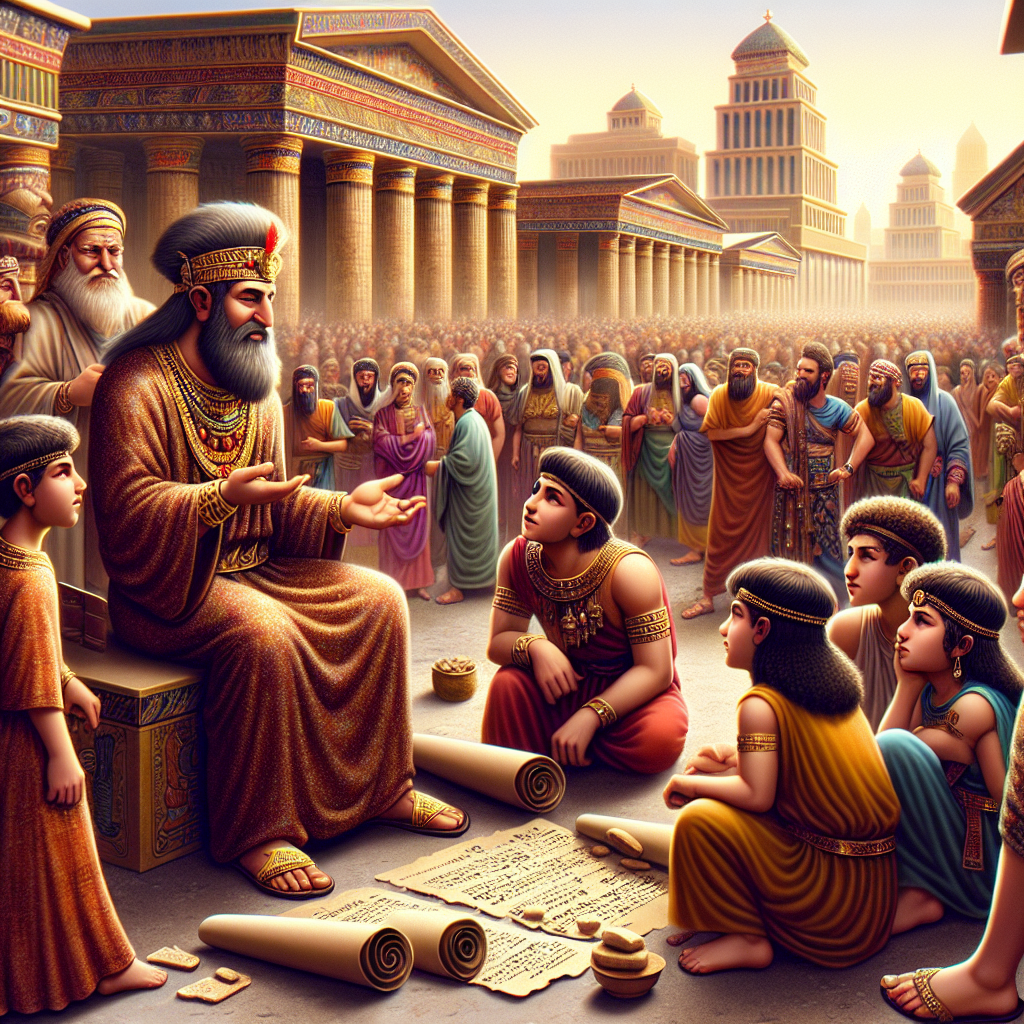
The timeless wisdom found in ”The Richest Man in Babylon” by George S. Clason offers invaluable lessons for modern investors, particularly when it comes to diversification strategies. Although the book was first published in 1926, its principles are rooted in ancient Babylonian parables that remain relevant today. One of the most compelling lessons from the book is the importance of diversification, a strategy that can help investors mitigate risk and achieve long-term financial success.
To begin with, the concept of diversification is elegantly illustrated through the story of Arkad, the richest man in Babylon. Arkad advises that one should never put all their eggs in one basket. This age-old adage underscores the importance of spreading investments across various asset classes to reduce risk. In modern terms, this means not investing all your money in a single stock, bond, or real estate property. Instead, a well-diversified portfolio might include a mix of stocks, bonds, real estate, and perhaps even alternative investments like commodities or cryptocurrencies.
Moreover, the principle of diversification is not just about spreading investments across different asset classes but also within those classes. For instance, when investing in stocks, it is prudent to diversify across different sectors such as technology, healthcare, and consumer goods. This approach ensures that a downturn in one sector does not disproportionately affect your entire portfolio. Similarly, in the realm of real estate, diversification might involve investing in both residential and commercial properties, or even in different geographic locations.
Transitioning from ancient wisdom to modern application, it is essential to recognize that diversification also involves understanding the correlation between different assets. In ”The Richest Man in Babylon,” Arkad emphasizes the importance of seeking advice from knowledgeable and experienced individuals. In today’s context, this could mean consulting financial advisors or using sophisticated tools to analyze how different investments interact with each other. For example, during economic downturns, bonds often perform better than stocks, providing a cushion against market volatility. By understanding these correlations, investors can create a more resilient portfolio.
Furthermore, the book teaches that diversification should not be a one-time activity but an ongoing process. As markets evolve and personal financial goals change, it is crucial to regularly review and adjust your investment portfolio. This dynamic approach ensures that your investments remain aligned with your risk tolerance and long-term objectives. For instance, as one approaches retirement, it might be wise to shift from high-risk, high-reward investments to more stable, income-generating assets.
In addition to these strategies, ”The Richest Man in Babylon” also highlights the importance of continuous learning and adaptation. The financial landscape is ever-changing, and staying informed about new investment opportunities and risks is vital. This could involve reading financial news, attending seminars, or even taking courses on investment strategies. By continually educating oneself, an investor can make more informed decisions and better navigate the complexities of the financial markets.
In conclusion, the ancient wisdom encapsulated in ”The Richest Man in Babylon” offers enduring lessons for modern investors, particularly in the realm of diversification. By spreading investments across various asset classes, understanding correlations, regularly reviewing portfolios, and committing to continuous learning, investors can build a robust and resilient financial future. The principles laid out by Arkad serve as a timeless guide, reminding us that while the tools and technologies may change, the fundamental strategies for building wealth remain constant.
The Role Of Financial Discipline: Applying Babylonian Principles Today
The Richest Man in Babylon, a timeless classic by George S. Clason, offers invaluable lessons on financial discipline that remain relevant for modern investors. The book, set in the ancient city of Babylon, uses parables to impart wisdom on wealth accumulation and management. One of the core principles emphasized is the importance of financial discipline, a concept that is as crucial today as it was in ancient times.
To begin with, the principle of paying oneself first is a cornerstone of financial discipline. In the book, Arkad, the richest man in Babylon, advises that a portion of all earnings should be set aside as savings. This simple yet powerful idea encourages individuals to prioritize their financial future. In today’s context, this can be translated into consistently contributing to savings accounts, retirement funds, or investment portfolios. By making saving a non-negotiable part of one’s financial routine, modern investors can build a solid foundation for long-term wealth.
Moreover, controlling expenditures is another vital lesson from Babylonian principles. Arkad teaches that one must live below their means to accumulate wealth. This advice is particularly pertinent in an era where consumerism is rampant, and the temptation to spend is ever-present. By creating and adhering to a budget, individuals can ensure that their spending aligns with their financial goals. This disciplined approach not only helps in avoiding unnecessary debt but also frees up resources for investment opportunities.
Transitioning to the concept of making money work for you, the book underscores the importance of investing wisely. Arkad’s advice to seek counsel from knowledgeable and experienced individuals before making investments is a timeless strategy. In the modern world, this translates to conducting thorough research, consulting financial advisors, and diversifying one’s investment portfolio. By making informed decisions, investors can mitigate risks and enhance their potential for returns.
Furthermore, the principle of safeguarding investments is another critical aspect of financial discipline highlighted in the book. Arkad warns against speculative ventures and advises seeking security over quick gains. This lesson is particularly relevant in today’s volatile financial markets, where the allure of high returns can lead to risky decisions. By focusing on stable and secure investments, modern investors can protect their wealth and ensure steady growth over time.
Additionally, the importance of continuous learning and self-improvement is a recurring theme in The Richest Man in Babylon. Arkad emphasizes that acquiring knowledge and skills is essential for financial success. In the contemporary world, this translates to staying informed about market trends, financial instruments, and economic developments. By continually educating themselves, investors can adapt to changing circumstances and make more informed decisions.
Lastly, the principle of generosity and giving back is also a significant lesson from Babylonian wisdom. Arkad believes that sharing wealth not only benefits others but also brings personal fulfillment and prosperity. In today’s society, this can be seen in philanthropic efforts, charitable donations, and community involvement. By incorporating generosity into their financial plans, modern investors can create a positive impact while also enriching their own lives.
In conclusion, the principles of financial discipline outlined in The Richest Man in Babylon offer timeless wisdom for modern investors. By paying oneself first, controlling expenditures, making informed investments, safeguarding wealth, continuously learning, and giving back, individuals can build a secure and prosperous financial future. These Babylonian lessons, though ancient, provide a solid foundation for navigating the complexities of today’s financial landscape.
Building Wealth Through Smart Investments: Timeless Advice From The Richest Man In Babylon
”The Richest Man in Babylon,” a classic book by George S. Clason, offers timeless financial wisdom that remains relevant for modern investors. Although the book was first published in 1926, its principles are rooted in common sense and practical advice that transcend time. By exploring the key lessons from this book, contemporary investors can gain valuable insights into building wealth through smart investments.
One of the fundamental lessons from ”The Richest Man in Babylon” is the importance of paying yourself first. This concept emphasizes the need to save a portion of your income before spending on anything else. By consistently setting aside at least 10% of your earnings, you create a financial cushion that can be invested to generate further wealth. This practice not only instills discipline but also ensures that you are prioritizing your financial future over immediate gratification.
In addition to saving, the book underscores the significance of living within your means. It is easy to fall into the trap of lifestyle inflation, where increased earnings lead to increased spending. However, maintaining a modest lifestyle allows you to allocate more resources towards investments. By controlling expenses and avoiding unnecessary debt, you can create a solid foundation for financial growth.
Another crucial lesson from the book is the power of compounding. When you invest your savings wisely, the returns generated can be reinvested to produce even greater returns over time. This snowball effect can significantly accelerate wealth accumulation. For instance, investing in a diversified portfolio of stocks, bonds, and other assets can provide a balanced approach to growth and risk management. The key is to start early and remain consistent, allowing the magic of compounding to work in your favor.
Moreover, ”The Richest Man in Babylon” highlights the importance of seeking advice from knowledgeable and experienced individuals. In the modern context, this translates to consulting financial advisors, reading investment literature, and staying informed about market trends. By leveraging the expertise of others, you can make more informed decisions and avoid common pitfalls. It is essential to recognize that investing is a continuous learning process, and staying educated can significantly enhance your financial acumen.
Diversification is another timeless principle emphasized in the book. Spreading your investments across different asset classes and sectors can mitigate risk and enhance potential returns. In today’s volatile market environment, diversification is more critical than ever. By not putting all your eggs in one basket, you can protect your portfolio from significant losses and increase the likelihood of steady growth.
Furthermore, the book advocates for the importance of protecting your investments. This involves conducting thorough research before committing your money and being cautious of schemes that promise high returns with little risk. In the modern era, this advice is particularly relevant given the prevalence of financial scams and speculative investments. By exercising due diligence and maintaining a long-term perspective, you can safeguard your wealth and ensure sustainable growth.
Lastly, ”The Richest Man in Babylon” teaches the value of perseverance and patience. Building wealth is not an overnight endeavor; it requires consistent effort and a long-term mindset. Market fluctuations and economic downturns are inevitable, but staying the course and remaining committed to your investment strategy can yield substantial rewards over time.
In conclusion, the lessons from ”The Richest Man in Babylon” offer invaluable guidance for modern investors. By paying yourself first, living within your means, harnessing the power of compounding, seeking expert advice, diversifying your portfolio, protecting your investments, and exercising patience, you can build a robust financial future. These timeless principles serve as a roadmap to financial success, proving that the wisdom of the past can indeed illuminate the path to modern prosperity.